
When the boating season comes to an end, deciding where to keep your boat over winter is an important consideration.
Cold temperatures, storms, rain, snow, frost and prolonged exposure to moisture can all take their toll on a boat that isn't being used. Even in milder climates, leaving a vessel exposed for several months can result in unnecessary deterioration and additional maintenance when it's time to get back on the water.
Choosing suitable winter boat storage can help protect your boat, improve security and make preparing for the next boating season considerably easier.
Whether you own a small fishing boat, RIB, speedboat, sports boat or larger leisure vessel, here's why professional boat storage can be worth considering during the winter months.
Why Is Winter Boat Storage Important?
Boats are designed to cope with water and the outdoors, but that doesn't mean they're immune to deterioration.
During the boating season, vessels are regularly used, inspected and maintained. Over winter, however, a boat might remain untouched for several months.
This extended period of inactivity combined with colder and wetter conditions can create problems.
Suitable boat storage during winter helps reduce exposure to harsh conditions while providing an opportunity to properly prepare and protect your vessel until you're ready to use it again.
1. Protect Your Boat From Winter Weather
One of the biggest advantages of winter boat storage is protection from the elements.
Depending on where you live, winter can bring heavy rain, strong winds, frost, snow and freezing temperatures.
Repeated exposure can affect covers, upholstery, seals, electrical components and exterior surfaces. Water finding its way into the wrong places can also become particularly problematic if temperatures subsequently fall below freezing.
Covered or indoor boat storage provides considerably greater protection from direct exposure to winter weather.
Even where indoor storage isn't available, a secure storage facility combined with appropriate winter preparation can offer an alternative to leaving your boat exposed at home or on the water.
2. Reduce Exposure to Moisture
Water might be a boat's natural environment, but unwanted moisture can still cause significant problems during storage.
Damp conditions can encourage mould and mildew inside cabins and storage compartments. Condensation can also affect upholstery, fabrics, electrical components and other materials.
Good ventilation and correct winter preparation are therefore particularly important.
Indoor or covered storage can reduce direct exposure to rain and snow, while specialist facilities may offer storage environments designed specifically for boats and other recreational vehicles.
3. Help Protect Against Frost and Freezing Temperatures
Freezing conditions can be particularly damaging if water remains within certain systems.
Depending on the type of boat, engines, freshwater systems, pumps and other components may require winterisation before prolonged cold weather.
Water expands when it freezes, potentially damaging components if the boat hasn't been correctly prepared.
Putting your vessel into storage doesn't replace proper winterisation, but combining appropriate preparation with suitable winter boat storage can provide a much better environment for the months ahead.
Always follow the manufacturer's recommendations for winterising your particular boat and engine.
4. Improve Security During the Off-Season
A boat left unattended for months can potentially become a target for theft or vandalism.
Outboard motors, electronics, navigation equipment and other marine accessories can be particularly valuable.
Professional secure boat storage facilities may offer features such as CCTV, controlled access, perimeter fencing, security lighting, gated entrances or on-site personnel.
Security arrangements vary considerably between storage providers, so always check what's included before choosing a facility.
You should also confirm any storage requirements specified by your insurer.
5. Protect Upholstery and Interiors
Boat interiors can suffer when left exposed to damp and changing temperatures.
Seats, cushions, carpets and cabin furnishings can develop mould or unpleasant odours if moisture becomes trapped inside the vessel.
Before storing your boat, thoroughly clean and dry the interior. Remove wet equipment, food and anything else likely to attract pests or retain moisture.
Where appropriate, remove valuable or sensitive items and store them separately.
Keeping the boat somewhere dry and protected can then help maintain the condition of the interior throughout winter.
6. Protect Your Boat's Appearance
Keeping a boat looking its best takes time and money.
Paintwork, gelcoat, metal fittings and other exterior surfaces are continuously exposed when a boat is kept outdoors.
Storing the vessel under cover or indoors during periods when it isn't being used reduces this exposure.
Before storage, thoroughly cleaning the hull and exterior also provides an opportunity to identify any damage or maintenance requirements that may have developed during the boating season.
Addressing these issues before winter can mean fewer surprises when spring arrives.
7. Reduce the Risk of Storm Damage
Winter isn't just colder – it can also bring much stronger weather.
High winds and storms can damage covers, move unsecured equipment and potentially cause damage from falling branches or nearby objects.
Boats kept on exposed driveways or open land may be particularly vulnerable.
A suitable storage facility can provide a more controlled environment during periods when extreme weather is more likely.
If you're using outdoor boat storage, check how the facility manages severe weather and whether there are requirements concerning covers, trailers or securing the vessel.
8. Free Up Space at Home
Boats can occupy a considerable amount of space.
If you keep a trailer boat at home during summer, having it sitting on your driveway throughout winter might not be particularly convenient.
Professional boat storage allows you to reclaim that space during the months when the boat isn't being used.
This can be especially useful for households that also need space for cars, caravans, motorhomes, trailers or other recreational vehicles.
9. Make Maintenance Easier
Winter is often an ideal time to carry out boat maintenance.
Once the season has finished, you can inspect the vessel and identify anything that needs attention before the following year.
Depending on the boat, this might include engine servicing, hull maintenance, electrical checks, cleaning, antifouling or repairs.
Some specialist boat storage facilities may offer maintenance services themselves or work alongside local marine specialists.
This can allow servicing and repairs to be completed while the boat would otherwise be sitting unused.
10. Be Ready for the Next Boating Season
Few things are more frustrating than the first good boating weekend arriving only to discover your boat isn't ready.
Proper winter storage and maintenance can make recommissioning much easier.
Instead of spending the beginning of the season dealing with problems caused by months of neglect, you can focus on preparing the vessel for use.
For keen boat owners, this alone can make professional winter storage worthwhile.
Indoor vs Outdoor Boat Storage During Winter
There isn't one storage option that's right for every boat.
Indoor Boat Storage
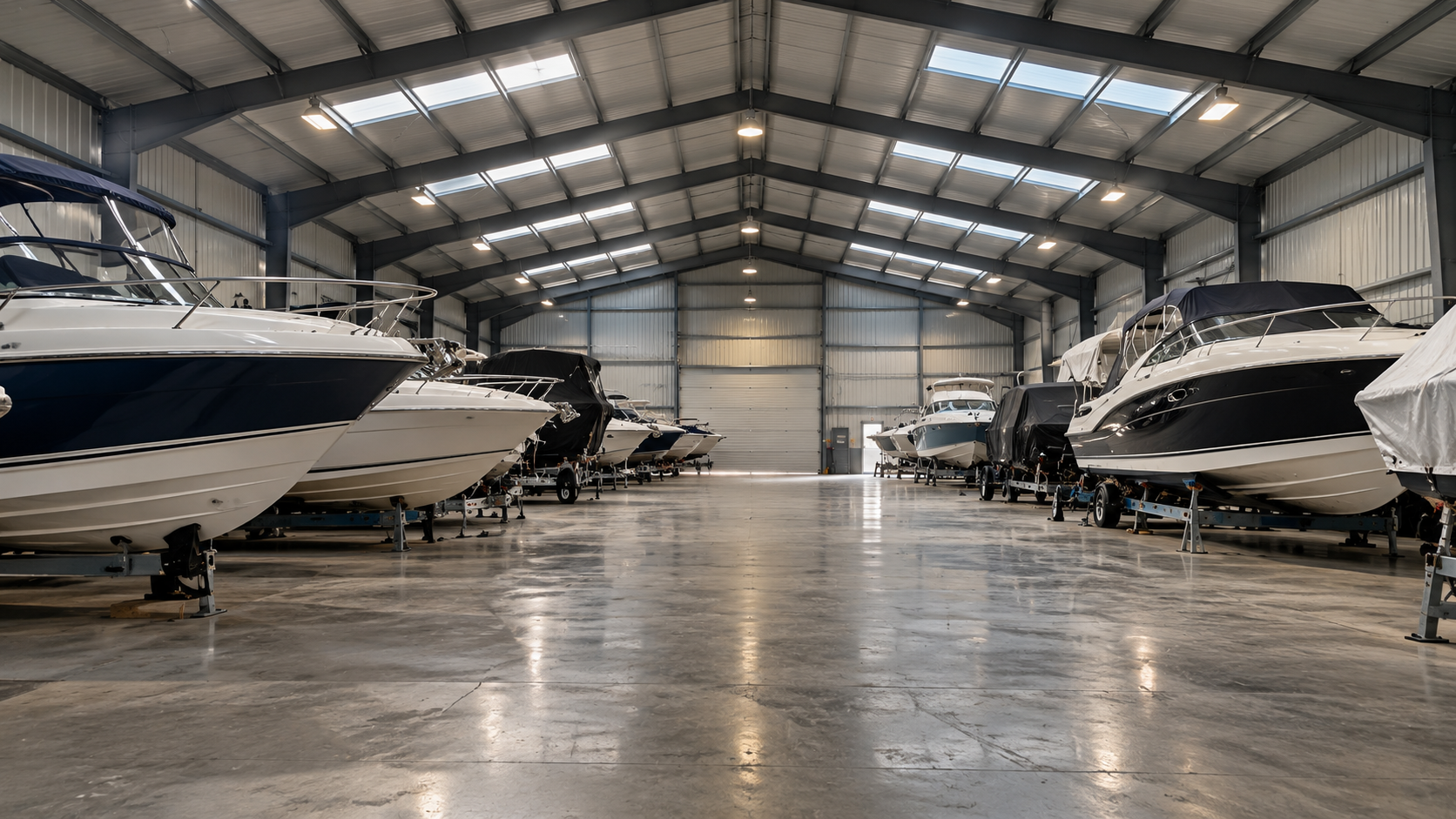
Indoor boat storage provides excellent protection from direct exposure to rain, snow, frost, wind and sunlight.
It can be particularly attractive for valuable boats or owners who want a high level of protection during the off-season.
The main consideration is size. Larger vessels may require specialist buildings with sufficient height and access.
Covered Boat Storage
Covered storage sits somewhere between indoor and outdoor storage.
The boat remains outside or within an open-sided structure but benefits from overhead protection against direct rain, snow and sunlight.
This can provide a useful balance between protection and cost.
Outdoor Boat Storage
Outdoor boat storage can be a cost-effective option, particularly for larger vessels and boats kept on trailers.
Good preparation becomes particularly important when storing a boat outdoors throughout winter.
A suitable cover, correct winterisation and secure storage location can all help protect the vessel.
Should You Store Your Boat on Its Trailer?
For smaller boats, storing the vessel on its trailer can be extremely convenient.
It makes transportation straightforward and allows the boat to be moved relatively easily when the new season begins.
However, trailers also require maintenance.
Check tyres, wheel bearings, brakes and other components as appropriate before long-term storage. If the boat and trailer will remain stationary for several months, follow the relevant manufacturer guidance concerning tyre pressures and long-term storage.
When searching for storage, remember to provide the overall dimensions of both the boat and trailer.
How Should You Prepare a Boat for Winter Storage?
Correct preparation will depend on your boat, engine, location and storage environment.
As a general starting point, owners should consider thoroughly cleaning and drying the vessel, removing food and wet equipment, checking the engine and fluids, preparing water systems for cold temperatures, maintaining batteries appropriately and inspecting covers and seals.
Sensitive electronics and valuable removable equipment may be better stored separately.
Engine and system winterisation requirements can vary significantly, particularly between outboard, inboard and sterndrive installations.
Always follow the manufacturer's recommendations or use a qualified marine professional if you're unsure.
What Should You Look for in a Winter Boat Storage Facility?
When searching for boat storage near you, consider more than simply the price.
Look at the type of storage available, security arrangements, accessibility and whether the facility can comfortably accommodate your boat and trailer.
You may also want to consider:
Indoor, covered or outdoor storage
CCTV and site security
Controlled or gated access
Maximum boat dimensions
Trailer storage
Electricity availability
Maintenance services
Cleaning facilities
Collection and delivery options
Access hours
Insurance requirements
For larger boats, always confirm access dimensions and manoeuvring space before booking.
Is Winter Boat Storage Worth It?
For many boat owners, the answer will depend on the value of the vessel, available space at home and local winter conditions.
However, professional storage can provide several advantages.
It can help protect your boat from weather, improve security, free up space at home and provide a suitable location for a vessel that may otherwise remain unused for months.
For owners of valuable or cherished boats, indoor or covered storage can offer an additional level of protection during the harshest part of the year.
Most importantly, proper winter storage can help ensure your boat is in the best possible condition when it's time to return to the water.
Find Winter Boat Storage Near You
Finding suitable boat storage shouldn't mean searching through countless individual websites and storage companies.
Store My Ride makes it easier to discover and compare vehicle storage providers in one place.
Whether you're looking for indoor boat storage, covered boat storage, outdoor boat storage, secure boat storage or long-term winter boat storage, you can search for facilities based on your location and requirements.
And if you have more than one recreational vehicle, Store My Ride can also help you discover storage for cars, motorcycles, caravans, motorhomes and campervans, jet skis, trailers, horseboxes and commercial vehicles.
Find winter boat storage near you with Store My Ride and give your boat a safe place to stay until the next adventure begins.